
The modern workforce has fundamentally changed, and millennials are at the center of this digital economic transformation. Traditional career paths are no longer the only route to financial stability, which is why the Millennial Digital Planner Side Hustle has emerged as one of the smartest, most scalable online business models available today. Combining creativity, productivity, low startup costs, and passive income potential, digital planner businesses appeal directly to millennials seeking flexibility, autonomy, and meaningful supplemental income.
For a generation that grew up navigating both analog systems and digital ecosystems, selling digital planners is uniquely aligned with millennial strengths. Millennials understand organization, branding, social media, and digital consumer behavior better than many previous generations. They are also highly motivated by diversified income streams, work-life balance, and entrepreneurship. This creates a perfect environment for building and monetizing planner products tailored for modern consumers.
Unlike many side hustles that demand inventory, shipping logistics, or continuous labor, digital planners offer a low-overhead, high-margin opportunity. Once designed and optimized, products can be sold repeatedly through platforms like Etsy, Shopify, Gumroad, or personal websites. Whether targeting productivity enthusiasts, wellness audiences, budget planners, ADHD users, or niche professionals, this business model allows for endless customization.
In this enterprise-grade guide, you’ll learn how to strategically launch, grow, optimize, and scale a successful Millennial Digital Planner Side Hustle while establishing genuine authority in a rapidly expanding marketplace.
Why the Millennial Digital Planner Side Hustle Is Booming
Millennials are increasingly turning toward side hustles due to rising living costs, economic uncertainty, student debt pressures, and a growing preference for financial independence. The digital planner industry intersects with all these realities by offering a business that requires minimal startup capital while providing potentially recurring income. As remote work, freelancing, and digital entrepreneurship continue to normalize, more millennials are exploring ways to monetize creative digital assets.
Digital planners are especially attractive because they serve a practical, evergreen need: organization. Consumers consistently seek better tools for productivity, budgeting, self-care, academic planning, and goal setting. As apps like GoodNotes, Notability, and iPad note-taking ecosystems expand, demand for downloadable planner templates continues to rise. This positions the Millennial Digital Planner Side Hustle not as a fleeting trend, but as part of a larger productivity commerce ecosystem.
Additionally, millennials are highly responsive to aesthetically pleasing, personalized digital products. Minimalist design, lifestyle branding, and productivity optimization are deeply embedded in millennial purchasing behaviors. This means creators who understand these preferences can craft compelling products that resonate with their own demographic while building trust-based brands.
Perhaps most importantly, this side hustle offers true scalability. One well-designed digital planner can generate hundreds or thousands of sales without increasing production costs, making it a highly efficient model for long-term wealth building.
What Exactly Is a Digital Planner Business?
A digital planner business involves creating downloadable planning tools designed for digital annotation apps or printable use. These products often include daily planners, weekly layouts, habit trackers, financial dashboards, meal plans, business organizers, project trackers, and niche productivity systems.
The business model is simple but powerful: design once, sell repeatedly. Customers purchase digital files, download them instantly, and use them on devices or print them as needed. This eliminates shipping, manufacturing, and physical inventory challenges, allowing entrepreneurs to focus on design quality, marketing, SEO, and customer retention.
For millennials, this creates an ideal blend of creative entrepreneurship and passive monetization. A successful Millennial Digital Planner Side Hustle may include:
| Product Type | Target Audience | Revenue Potential | Complexity |
|---|---|---|---|
| Daily Productivity Planners | General professionals | High | Medium |
| Budget & Finance Planners | Debt-conscious millennials | Very High | Medium |
| Wellness & Self-Care Planners | Health-focused users | High | Low |
| ADHD/Neurodivergent Planners | Specialized niche | Very High | High |
| Wedding/Event Planners | Seasonal consumers | Medium | Medium |
| Business/Content Planning Systems | Entrepreneurs | Very High | High |
This diversity allows creators to specialize or diversify depending on market opportunities.
The Unique Advantages Millennials Have in This Market
Millennials occupy a strategic position in the digital planner economy because they combine digital literacy with purchasing empathy. They understand firsthand the organizational struggles of balancing careers, side hustles, family responsibilities, and personal development.
This gives millennial entrepreneurs a unique edge: they can design products based on authentic lived experiences rather than theoretical assumptions. A millennial who has struggled with burnout may create wellness planners that genuinely solve stress management problems. A freelancer may develop income-tracking dashboards specifically tailored to gig workers. This authenticity often translates into stronger branding and higher customer loyalty.
Millennials are also particularly skilled in:
- Social media marketing
- Pinterest SEO
- Etsy optimization
- Personal branding
- Content marketing
- Digital product ecosystems
- Subscription communities
These skills significantly reduce barriers to market entry. Rather than relying solely on paid advertising, millennials can leverage organic content, TikTok tutorials, Instagram reels, and SEO-rich product listings to build sustainable traffic.
As productivity culture continues evolving, the Millennial Digital Planner Side Hustle becomes less about selling templates and more about building trusted organizational systems.
How to Identify Profitable Digital Planner Niches
One of the biggest mistakes new creators make is entering overly broad categories without strategic differentiation. Generic planners face intense competition, which can make visibility difficult. Instead, success often comes from solving specific problems for defined audiences.
Profitable niches are typically built around pain points, identity, or specialized workflows. Examples include:
- Financial independence planners for millennials
- Side hustle management planners
- ADHD-friendly executive functioning systems
- Content creator planning bundles
- Remote worker productivity dashboards
- Mompreneur scheduling systems
- Wedding budgeting templates
- Career transition planners
The best niches combine strong search demand with emotional resonance. Buyers often purchase planners not just for organization, but for transformation. They want control, clarity, reduced anxiety, and progress.
A powerful Millennial Digital Planner Side Hustle focuses on outcomes rather than just layouts. Instead of selling a “weekly planner,” you may sell a “freelancer income and client management system.” This subtle repositioning dramatically increases perceived value.
Essential Tools for Launching Your Digital Planner Business
Starting a digital planner side hustle no longer requires advanced technical expertise, but using the right tools can dramatically improve efficiency and product quality.
Core tools often include:
- Canva Pro for beginner-friendly design
- Adobe Illustrator for advanced customization
- Keynote or PowerPoint for hyperlinked planners
- GoodNotes for product testing
- Etsy or Shopify for storefronts
- Pinterest for traffic generation
- ConvertKit or Klaviyo for email marketing
- SEO keyword tools like eRank or Marmalead
Canva remains a favorite among millennials due to accessibility, affordability, and speed. However, creators seeking premium pricing often invest in more advanced design systems for better user experiences.
The barrier to entry is low, but professionalism matters. In a competitive market, superior UX, polished branding, and thoughtful functionality separate hobby sellers from scalable businesses.
Building a Strong Brand Around Your Millennial Digital Planner Side Hustle
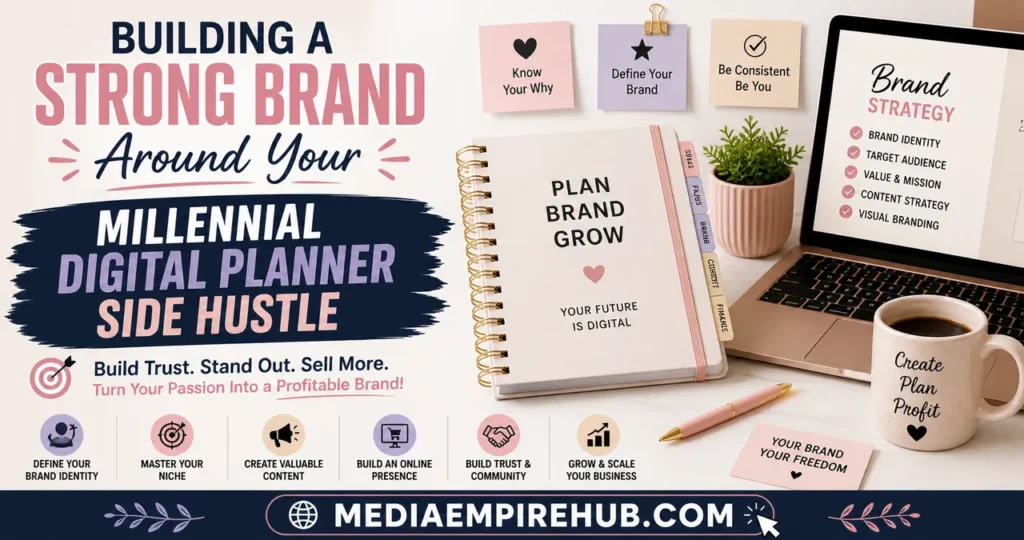
Branding is where many digital planner sellers either plateau or accelerate. Consumers increasingly seek cohesive experiences rather than isolated products. Strong branding creates trust, repeat purchases, and higher average order values.
A successful brand includes:
- Distinct visual identity
- Consistent typography and color psychology
- Audience-specific messaging
- Outcome-driven product positioning
- Lifestyle alignment
- Authority content
For example, a creator targeting overwhelmed millennial professionals may use minimalist aesthetics, muted tones, and messaging centered on clarity and work-life balance. In contrast, a planner brand targeting entrepreneurial women may emphasize empowerment, bold visuals, and revenue optimization.
As marketing strategist Seth Godin famously noted:
“People do not buy goods and services. They buy relations, stories, and magic.”
This principle is especially relevant for the Millennial Digital Planner Side Hustle. You are not simply selling pages—you are selling transformation, structure, and aspirational identity.
SEO Strategies That Drive Planner Sales
Search engine optimization is critical for long-term visibility and sustainable passive income. While social platforms can generate spikes in traffic, SEO builds compounding discoverability over time.
Key SEO channels include:
- Etsy SEO
- Pinterest SEO
- Google blog content
- Product page optimization
- YouTube search
- Email list discoverability
Important keyword strategies involve:
- Long-tail phrases
- Seasonal keywords
- Pain-point-based search terms
- Productivity niche variations
- Semantic keyword clusters
For example, instead of solely targeting “digital planner,” stronger opportunities may include:
- Millennial budget planner
- ADHD digital life planner
- Side hustle productivity planner
- Entrepreneur planning template
- Passive income digital organizer
A sophisticated Millennial Digital Planner Side Hustle often integrates blog content with storefront SEO. Educational content builds authority, backlinks, and customer trust while driving product conversions.
Pricing Models That Maximize Profitability
Many beginners underprice their products, assuming low prices will increase sales. In reality, pricing should reflect transformation, design quality, niche specificity, and brand authority.
Common pricing strategies include:
| Pricing Model | Typical Range | Best For |
|---|---|---|
| Budget Template | $3–$10 | Entry-level products |
| Premium Planner | $15–$40 | Specialized systems |
| Bundle Offers | $25–$75 | Higher AOV |
| Membership Access | $10–$30/month | Recurring revenue |
| Custom Corporate Systems | $100+ | B2B opportunities |
Premium pricing often attracts more serious buyers while increasing perceived value. Bundling products can significantly improve revenue without substantial extra workload.
A strategic Millennial Digital Planner Side Hustle focuses less on volume alone and more on customer lifetime value, upsells, and ecosystem expansion.
Traffic Generation Beyond Etsy
While Etsy is a powerful launchpad, relying exclusively on one marketplace can create vulnerability due to algorithm shifts, fee increases, and account risks.
Diversified traffic sources strengthen business resilience:
- Pinterest pins
- Instagram reels
- TikTok productivity videos
- SEO blogs
- Email funnels
- YouTube tutorials
- Affiliate partnerships
- Lead magnets
For instance, offering a free habit tracker in exchange for email signups can build a long-term audience you own independently of platform changes.
Millennials often excel at community-building, which creates opportunities for private groups, productivity memberships, or subscription planner clubs. Over time, these channels transform a side hustle into a scalable digital brand.
Common Mistakes New Digital Planner Entrepreneurs Make
Despite the accessibility of this market, many side hustlers struggle due to preventable strategic errors.
Frequent pitfalls include:
- Poor niche targeting
- Generic product creation
- Weak SEO
- Underpricing
- Inconsistent branding
- Overdependence on Etsy
- Lack of audience research
- Ignoring customer feedback
- Trend chasing without strategy
Many creators mistakenly assume design alone guarantees sales. However, success depends equally on positioning, discoverability, and business systems.
A thriving Millennial Digital Planner Side Hustle requires entrepreneurial discipline, not just creativity. Treating the venture like a real digital asset business rather than a hobby significantly improves outcomes.
Scaling From Side Hustle to Full Business
Once foundational sales are established, scaling opportunities expand considerably. The most successful digital planner brands evolve beyond one-off products into broader productivity ecosystems.
Scaling strategies may include:
- Expanding product suites
- Subscription communities
- Courses on planner creation
- Licensing templates
- Corporate productivity tools
- White-label solutions
- Affiliate partnerships
- Print-on-demand expansions
For example, a millennial entrepreneur who starts by selling budgeting planners may later launch financial literacy courses, membership dashboards, and coaching frameworks.
This transition transforms the Millennial Digital Planner Side Hustle from supplementary income into a potentially significant enterprise with diversified revenue channels.
Industry Trends Shaping the Future of Digital Planner Businesses
The digital planner industry continues evolving rapidly due to technology shifts, consumer preferences, and AI integration.
Emerging trends include:
- AI-assisted customization
- Hyper-personalized planner systems
- Subscription planner ecosystems
- Wellness integration
- Neurodivergent-friendly design
- Gamification features
- Productivity analytics dashboards
- Cross-platform integrations
Millennials who adapt early to these changes can establish stronger authority and maintain competitive advantages.
The future is likely to favor creators who combine functional productivity tools with adaptive user experiences. Static planners may remain relevant, but interactive systems will increasingly dominate premium market segments.
Real-World Example: A Hypothetical Millennial Success Story
Imagine Sarah, a 33-year-old marketing professional burdened by rising living expenses and seeking additional income. She identifies a niche: productivity planners for freelance creatives juggling multiple clients.
Using Canva, Etsy SEO, Pinterest, and targeted social media content, Sarah launches a planner bundle priced at $29. Within six months, she generates $3,500 monthly in mostly passive income. She later expands into courses, templates, and email memberships, increasing annual revenue beyond $80,000.
Sarah’s story illustrates a core principle: the Millennial Digital Planner Side Hustle is not merely supplemental—it can become transformative when paired with strategic execution.
Misconceptions About Digital Planner Side Hustles
Several myths prevent aspiring entrepreneurs from entering this market effectively.
Common misconceptions include:
- “The market is oversaturated.”
- “You need advanced design skills.”
- “Only influencers succeed.”
- “Low prices guarantee sales.”
- “Digital products are easy money.”
In reality, while competition exists, specialization and branding consistently create opportunities. The market rewards value creation more than generic participation.
Like any legitimate business, success requires strategy, consistency, and optimization. However, compared to many alternative side hustles, digital planners offer unusually favorable margins and scalability.
Financial Benefits and Lifestyle Flexibility

One of the strongest appeals of the Millennial Digital Planner Side Hustle is the combination of earning potential and lifestyle freedom.
Key benefits include:
- Location independence
- Flexible work hours
- Low overhead
- Passive income capability
- Creative ownership
- Portfolio diversification
- Personal brand building
- Potential business sale value
For millennials seeking alternatives to burnout-heavy employment models, this business aligns with broader lifestyle design priorities.
Rather than exchanging hours directly for dollars, digital planner creators build assets that can appreciate through optimization and audience growth.
FAQ About Millennial Digital Planner Side Hustle
Is a Millennial Digital Planner Side Hustle still profitable in 2026?
Yes, the Millennial Digital Planner Side Hustle remains profitable due to growing productivity markets, increased digital note-taking adoption, and ongoing demand for niche organizational tools.
How much money can I realistically make selling digital planners?
Income varies widely, but many creators earn anywhere from a few hundred dollars monthly to full-time incomes exceeding $50,000 annually depending on niche, SEO, and product ecosystem strength.
Do I need graphic design experience to start a Millennial Digital Planner Side Hustle?
No, many successful sellers begin using beginner-friendly tools like Canva, though improving design quality can significantly enhance competitiveness over time.
What platform is best for selling digital planners?
Etsy is often ideal for beginners due to built-in traffic, while Shopify or personal websites provide stronger long-term control and branding opportunities.
How do I stand out in a crowded digital planner market?
Specialized niches, strong SEO, premium branding, audience-specific solutions, and ecosystem development are the best ways to differentiate your Millennial Digital Planner Side Hustle.
Can digital planners truly generate passive income?
Yes, while setup and marketing require active work, optimized planners can generate recurring passive revenue through repeatable digital sales.
Conclusion
The Millennial Digital Planner Side Hustle represents one of the most accessible, scalable, and strategically aligned business opportunities for modern entrepreneurs seeking financial flexibility and creative independence. By combining niche expertise, SEO authority, branding excellence, and audience-focused product development, millennials can build sustainable digital businesses with real long-term potential.
For those willing to approach this opportunity strategically rather than casually, digital planners can evolve from a side project into a powerful income-generating asset that supports both financial growth and lifestyle freedom.