

Starting a company is exciting, but the paperwork side of things can feel like a maze if nobody walks you through it first. If you have been searching for how to register a small business without wasting weeks on confusing government websites, you are in the right place. This guide breaks the entire process into plain, practical steps so you can move from idea to officially recognized business owner without the usual stress.
Plenty of new founders assume registration is just one form you fill out and forget. In reality, it is a series of smaller decisions that build on each other, from picking a legal structure to securing the right licenses in your city or county. Getting these steps right early saves you from expensive corrections later, and it protects your personal assets from day one. By the end of this article, you will understand exactly what to do, in what order, and why each step matters.
Why Registering Your Business the Right Way Matters
A lot of people put off registering because they think they can “figure it out later” once the business starts making money. That mindset causes more problems than it solves. Operating without proper registration can expose you to personal liability, meaning your house, car, or savings could be at risk if the business runs into legal trouble or debt. Registering separates you, as a person, from your company, as a legal entity, and that separation is one of the most valuable protections a founder can have.
There is also the credibility factor. Banks, suppliers, and even customers tend to trust a business that shows up correctly in state records over one that operates informally. As one longtime small business consultant put it, “clients don’t ask to see your business plan, they ask to see your registration, and that single document opens more doors than any pitch deck.” Registering also unlocks access to business loans, grants, and vendor accounts that are simply unavailable to unregistered operations. If you’re serious about growth, this step is not optional.
🚀 Master Business Launch Roadmap: If you want a complete, step-by-step framework covering everything from idea validation to marketing, check out our master guide:
👉 How to Start and Launch a Small Business in 2026
Choosing the Right Business Structure Before You Register
Before you can register a small business, you need to decide what kind of legal entity it will be. The most common options in the United States are sole proprietorships, partnerships, limited liability companies, and corporations. Each structure comes with different tax treatment, paperwork requirements, and levels of personal liability protection, so this decision shapes everything that follows.
A sole proprietorship is the simplest route, requiring almost no formal registration beyond local licensing, but it offers zero separation between you and your business debts. A limited liability company, often shortened to LLC, is the most popular choice for small business owners because it blends liability protection with relatively simple management and flexible tax options. According to the U.S. Small Business Administration, choosing the right structure early can save founders significant time and money down the road, since changing structures after the fact often means re-registering, updating contracts, and notifying the IRS all over again. Corporations, whether S-corps or C-corps, tend to suit businesses planning to raise outside investment or eventually go public, though they come with more compliance obligations like annual meetings and detailed record-keeping.
💡 Need Business Ideas First? Before deciding on a structure, explore high-margin, low-overhead models you can start on a budget:
📖 Low Investment Business Ideas With High Profit
Picking a Business Name and Checking Its Availability
Your business name is more than a label, it is part of your brand identity and it needs to be legally available before you can move forward. Most states require you to check that no other registered business is already using an identical or confusingly similar name within that state. You can usually run this search directly through your Secretary of State’s website, and it only takes a few minutes.
Beyond state availability, it is smart to check whether the name is free on the U.S. Patent and Trademark Office’s database, especially if you plan to expand beyond your home state or protect your brand nationally. Trademark conflicts can force a rebrand years down the line, which is far more expensive and disruptive than doing the research upfront. It also helps to check domain name and social media handle availability at this stage, since a mismatched online presence can confuse potential customers. Once you have confirmed your name is clear, many states allow you to reserve it for a short period while you finish the rest of your registration paperwork.
How to Register a Small Business With Your State
This is the step most people picture when they think about how to register a small business, and it usually happens through your state’s Secretary of State office or a similar business filing agency. If you formed an LLC or corporation, you will file formation documents, often called Articles of Organization or Articles of Incorporation, along with a filing fee that typically ranges from fifty to a few hundred dollars depending on your state.
Sole proprietors and general partnerships usually skip this formal state filing but may still need to register a “doing business as” name, commonly known as a DBA, if they plan to operate under a name different from their own legal name. Once your formation documents are approved, the state issues a confirmation, sometimes called a Certificate of Formation or Certificate of Good Standing, which acts as official proof your business exists. Keep multiple copies of this document, since banks, landlords, and licensing agencies will ask to see it repeatedly. Many entrepreneurs choose to register a small business online through their state’s official portal because it is faster than mailing paper forms and gives you instant confirmation of receipt.
Getting an EIN and Setting Up Tax Accounts
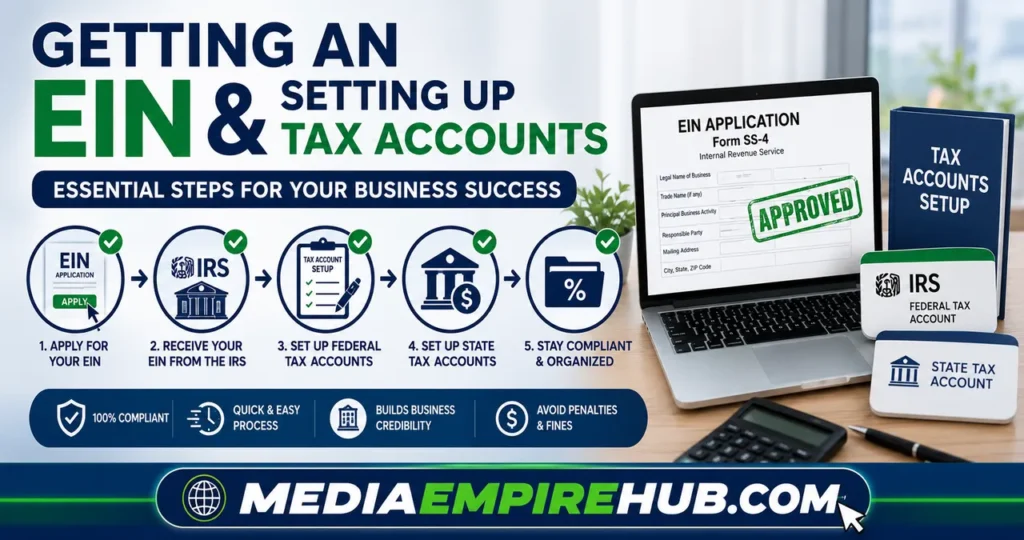
Once your business is officially formed at the state level, the next move is applying for an Employer Identification Number, or EIN, through the Internal Revenue Service. Think of an EIN as a Social Security number for your business. You will need it to open a business bank account, hire employees, file federal taxes, and apply for most business licenses. The good news is that applying is free and can be done directly on the IRS website in about ten minutes.
Depending on your state and industry, you may also need to register for state tax accounts, including sales tax permits if you sell physical goods, or state income withholding accounts if you plan to hire staff. Skipping this step is one of the most common regrets new owners mention, because back taxes and penalties pile up quickly once you start generating revenue without the proper accounts in place. It is worth checking with your state’s department of revenue early, since requirements vary significantly from one state to another, and some industries face additional excise or franchise tax obligations that catch new founders off guard.
Licenses, Permits, and Local Requirements You Shouldn’t Skip
State registration and an EIN get you recognized federally and at the state level, but most businesses also need local licenses or permits to legally operate. These requirements depend heavily on your industry and location, ranging from general business operating licenses issued by your city or county to specialized permits for things like food service, childcare, cosmetology, or construction work.
Zoning permits are another piece people often forget about, particularly if you are running a home-based business. Some residential zones restrict commercial activity, foot traffic, or signage, so it pays to check with your local zoning office before you sign a lease or start advertising your address. As a city clerk once told a group of new entrepreneurs at a small business workshop, “the businesses that struggle later are almost always the ones that skipped the boring permit paperwork in the beginning.” Health department permits, fire department inspections, and professional licensing boards may also apply depending on what you do, so it is worth building a checklist specific to your industry before you consider the registration process complete.
Opening a Business Bank Account and Separating Finances
Once your registration paperwork and EIN are in hand, opening a dedicated business bank account should be near the top of your list. Mixing personal and business finances is one of the fastest ways to lose the liability protection that comes with forming an LLC or corporation, a mistake courts sometimes refer to as “piercing the corporate veil.” Keeping the two separate from day one protects you legally and makes bookkeeping dramatically simpler.
Most banks require your formation documents, EIN confirmation letter, and sometimes an operating agreement or bylaws before they will open a business account. It is worth shopping around, since fee structures, minimum balance requirements, and perks like free wire transfers or cash-back business cards vary widely between institutions. A separate account also makes tax season far less painful, since your accountant or tax software can pull clean records without sorting through years of mixed personal and business transactions. Many owners pair their new business account with accounting software right away, which makes tracking expenses and preparing for quarterly taxes much less overwhelming.
Common Mistakes People Make When They Register a Small Business
Even with good intentions, a lot of new founders trip over the same handful of mistakes. One of the biggest is choosing a business structure based on what a friend used rather than what actually fits their specific situation, industry, and growth plans. Another common misstep is forgetting to register a small business name change or address update with the state, which can cause mail from tax authorities or licensing boards to go to the wrong place entirely.
People also frequently underestimate ongoing compliance requirements. Many states require annual reports or franchise tax filings to keep your business in good standing, and missing these deadlines can lead to administrative dissolution, meaning the state essentially cancels your business registration without you realizing it until months later. Forgetting to renew local licenses or letting insurance lapse are two more frequent oversights. Building a simple compliance calendar with renewal dates as soon as you finish registering can prevent nearly all of these headaches before they start.
Prepare Before You Register: Banks and licensing bodies often ask for business details—learn how to document your model and goals effortlessly:
📖 How to Write a Simple Business Plan
Costs and Timelines You Should Expect
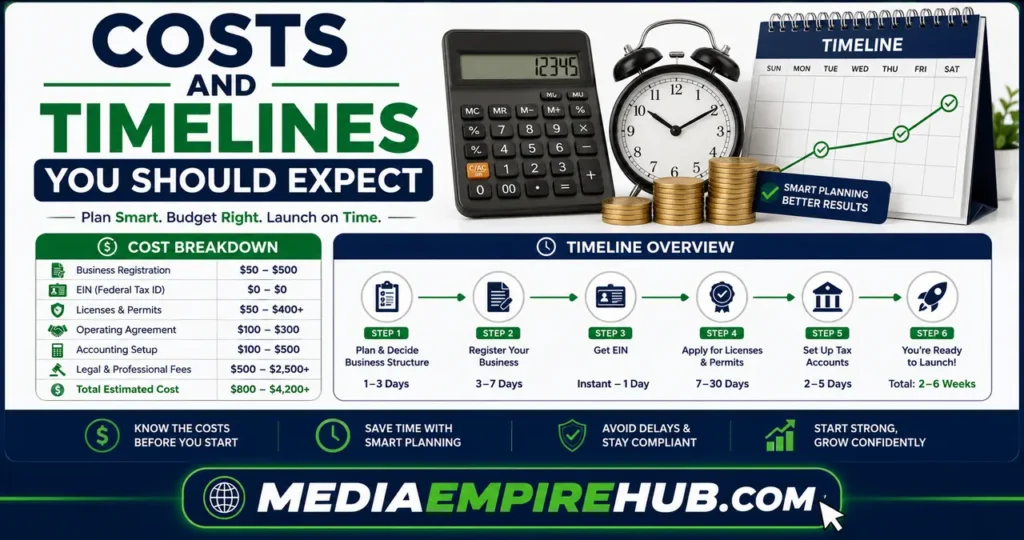
One question that comes up constantly is how much it actually costs and how long it takes to register a small business from start to finish. The honest answer is that it varies quite a bit by state and business structure, but there are some general patterns worth knowing so you can budget accordingly.
State filing fees for LLCs typically fall somewhere between fifty and five hundred dollars, with states like California and Massachusetts on the higher end and states like Kentucky or Arizona on the lower end. Processing times range from same-day online approval in some states to several weeks if you file by mail during a busy season. Add in EIN registration, which is free, DBA filing if needed, local licensing fees, and any professional help from an accountant or attorney, and most small businesses spend somewhere between one hundred and eight hundred dollars total during the registration phase. The table below gives a general snapshot to help you plan.
| Step | Typical Cost Range | Typical Timeframe |
|---|---|---|
| State LLC or Corporation filing | $50 to $500 | Same day to 3 weeks |
| DBA registration (if needed) | $10 to $100 | 1 to 10 business days |
| EIN application via IRS | Free | Immediate to 24 hours |
| Local business license | $25 to $400 | 1 to 4 weeks |
| Industry-specific permits | $50 to $1,000+ | 2 to 8 weeks |
| Registered agent service (optional) | $100 to $300 annually | Ongoing |
Keep in mind these are general ranges, and it is always smart to confirm exact fees through your state’s official Secretary of State website or the U.S. Small Business Administration’s resources, since figures change periodically and vary by industry.
Working With Professionals Versus Doing It Yourself
A question that trips up a lot of first-time founders is whether to hire a lawyer or accountant for registration or handle it entirely on their own. For straightforward single-member LLCs in states with simple filing systems, doing it yourself is often perfectly manageable, especially with the wealth of free guidance available through government resources like the SBA and IRS websites. Many entrepreneurs successfully register a small business without spending a dime on professional fees, particularly when their business model is uncomplicated.
That said, certain situations genuinely benefit from professional input. If you are bringing on business partners, raising outside investment, or operating in a heavily regulated industry like healthcare or finance, an attorney can help you draft agreements that prevent disputes down the road. Accountants are similarly valuable when your tax situation involves multiple states, international sales, or complex deduction strategies. As Forbes has noted in coverage of small business formation, the cost of a short consultation with a professional is often far less than the cost of untangling a legal or tax mistake years later, which makes it a worthwhile investment for more complicated ventures even if the core registration steps remain simple.
Keeping Your Business Compliant After Registration
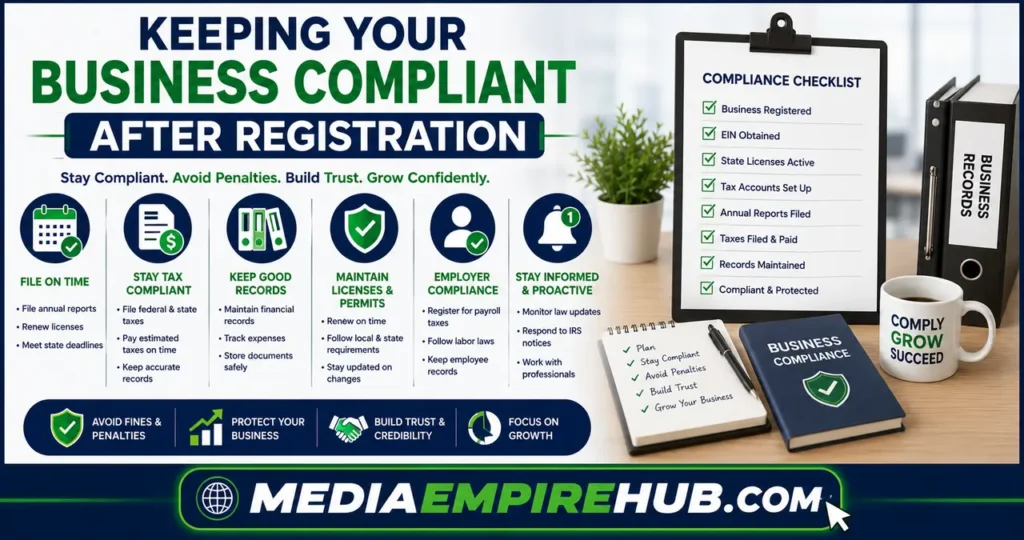
Registering is really just the starting line, not the finish line. Most states require ongoing filings to keep your business active and in good standing, and ignoring these can undo all the work you put in at the beginning. Annual or biennial reports, franchise taxes, and license renewals are the most common recurring obligations, and deadlines differ depending on where you formed your business.
Setting calendar reminders well ahead of each deadline is one of the simplest habits that separates businesses that thrive from those that quietly lapse into bad standing without the owner even noticing. It is also worth revisiting your business structure periodically as you grow, since what worked for a solo freelancer might not be the best fit once you hire employees or bring on investors. Resources like Wikipedia’s overview of business entity types can offer a helpful refresher on how different structures compare, though your state’s official filing office remains the most accurate and current source for compliance requirements specific to your situation.
Conclusion
Learning how to register a small business does not have to feel overwhelming once you break it into clear, sequential steps. Start by choosing the right legal structure for your goals, confirm your business name is available, file your formation paperwork with the state, and secure your EIN. From there, layer in the local licenses, permits, and business bank account that make everything official and protected. Skipping steps or rushing through the process tends to cost far more time and money later than simply doing it right from the start.
The businesses that grow smoothly are almost always the ones that treated registration as a foundation rather than an afterthought. Take it one step at a time, use official government resources to confirm requirements specific to your state and industry, and do not hesitate to bring in a professional when your situation gets more complex. With the right groundwork in place, you can focus your energy on what actually matters, building a business that lasts.
Frequently Asked Questions
How long does it take to register a small business?
Timelines vary depending on your state and business structure, but most online filings are processed within a few days to three weeks. States with fully digital filing systems tend to be faster, sometimes offering same-day approval, while paper filings mailed during peak seasons can take longer. Local licenses and industry-specific permits often add extra time on top of the state filing itself, so it is smart to start the process at least a month before you plan to officially open.
Do I need a lawyer to register a small business?
Not necessarily. Many people successfully register a small business entirely on their own, especially straightforward single-member LLCs, using free resources from their state’s official filing website and the IRS. However, if your situation involves multiple business partners, outside investors, or a heavily regulated industry, consulting an attorney can help you avoid costly disputes or compliance mistakes later on.
What is the difference between registering a business and getting a business license?
Registering a business establishes your legal entity, such as an LLC or corporation, with your state government. A business license, on the other hand, is separate permission from your city, county, or industry regulator to actually operate within that jurisdiction. Most businesses need both, since state registration alone typically does not grant you the right to open your doors without local licensing in place.
Can I register a small business without an EIN?
Sole proprietors without employees can technically use their Social Security number instead of an EIN, but almost every other structure, including LLCs and corporations, will need one to open a business bank account, hire staff, or file certain tax forms. Since applying for an EIN through the IRS is free and takes only a few minutes, most experts recommend getting one regardless of your structure to keep your finances cleanly separated.
How much does it cost to register a small business?
Costs vary widely by state, but most founders spend somewhere between one hundred and eight hundred dollars total once you account for state filing fees, local licenses, and any optional professional help. LLC filing fees alone typically range from fifty to five hundred dollars depending on your state, with additional costs for DBA registration or industry-specific permits if your business requires them.
What happens if I don’t register my small business?
Operating without registering exposes you to personal liability, meaning your personal assets could be at risk if your business faces debt or legal action. Unregistered businesses also struggle to open business bank accounts, apply for loans, or build credibility with vendors and customers, which can significantly limit growth potential compared to properly registered competitors.