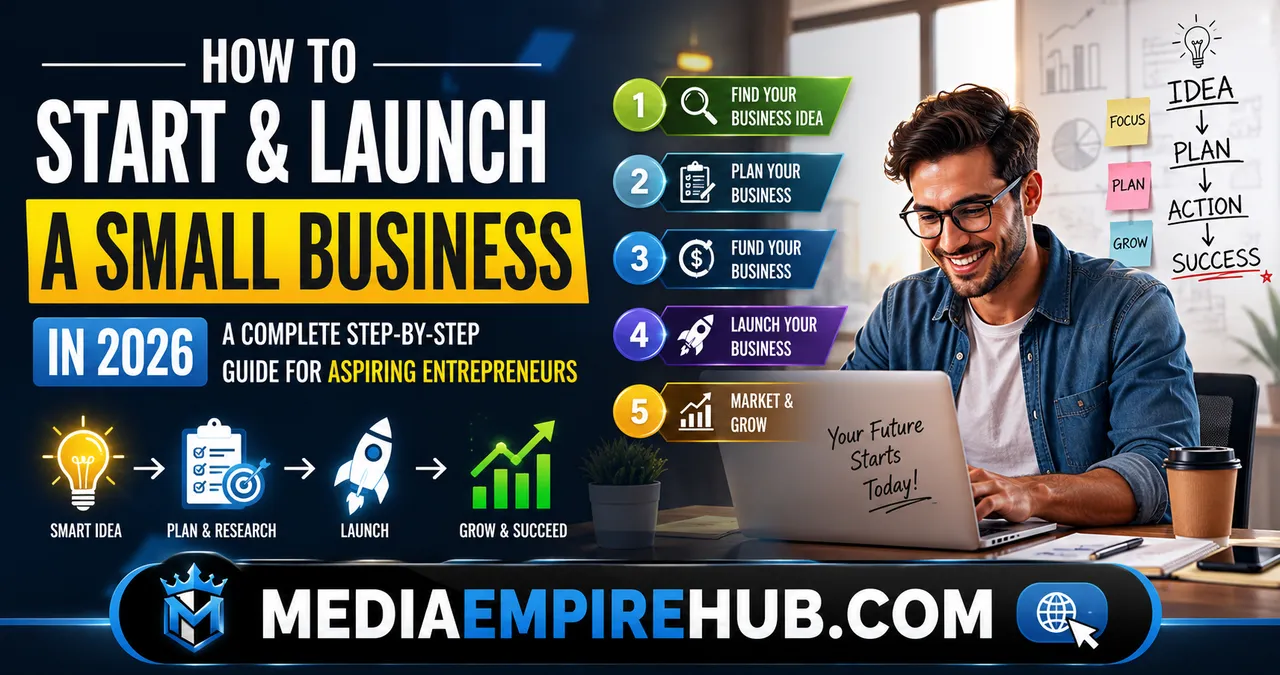
Starting a company has never felt more exciting or more overwhelming at the same time, and if you’re reading this, you’re probably somewhere in that mix of curiosity, ambition, and a little bit of nerves. Learning how to start and launch a small business in 2026 means understanding a landscape that looks quite different from even five years ago. Consumer habits have shifted, digital tools have matured, and the barriers that once kept everyday people from opening their own shop have gotten noticeably lower. Yet the fundamentals of building something real and sustainable haven’t changed all that much, and that’s actually good news for you.
This guide is going to walk you through everything you need to think about, plan for, and act on if you’re serious about building a business this year. We’ll cover mindset, market research, legal structure, funding, branding, marketing, technology, and the everyday realities of running something that’s truly yours. There’s no fluff here, no vague motivational talk without substance. Just a real, grounded roadmap written the way a knowledgeable friend might explain it to you over coffee, if that friend happened to have spent years watching businesses succeed and fail.
Why 2026 Is Actually a Great Time to Start a Small Business
There’s a common myth that the best time to start a business was years ago, and the second-best time is never quite now either. That kind of thinking keeps a lot of talented people stuck on the sidelines. The truth is that every era has its own set of advantages, and this one happens to favor small, nimble operators more than most people realize. Digital payment systems are cheaper and faster than ever, cloud-based tools have replaced expensive software licenses, and consumers are actively seeking out independent brands instead of defaulting to big-box options.
Economic uncertainty tends to scare people away from entrepreneurship, but historically, some of the most resilient companies were born during shaky economic periods because their founders built lean, adaptable models from day one. If you’re thinking about how to start and launch a small business in 2026, you’re entering a market where remote work has normalized flexible business models, where niche products can find global audiences through social platforms, and where automation handles a lot of the repetitive tasks that used to require full teams. This doesn’t mean it’s easy. It means the playing field has shifted in favor of people who are willing to be strategic, patient, and genuinely useful to their customers.
There’s also something to be said about consumer trust right now. People are tired of impersonal corporations and are actively rewarding small businesses that feel authentic and community-rooted. According to data frequently cited by the U.S. Small Business Administration, small businesses account for a substantial share of net new jobs created in the country each year, which tells you that this sector isn’t some fringe activity. It’s a core part of how modern economies function and grow.
Getting Your Mindset Right Before You Do Anything Else
Before you write a business plan or register a company name, you need to have an honest conversation with yourself about why you want to do this and what you’re actually willing to sacrifice. Entrepreneurship is often romanticized on social media, all highlight reels and inspirational quotes, but the daily reality involves uncertainty, long hours in the early stages, and decisions that carry real financial weight. That doesn’t mean you should be scared off. It means you should walk in with your eyes open.
Ask yourself what problem you’re genuinely passionate about solving, because passion alone won’t carry you through tough months, but the complete absence of it will make quitting feel a lot more tempting when things get hard. As the entrepreneur and author Seth Godin once put it in one of his talks on remarkable businesses, people don’t want to be sold to constantly, they want to be told a story worth sharing. That idea applies just as much to how you frame your own journey as it does to how you market your products.
Resilience matters more than raw talent in the early days. You will make mistakes with pricing, with hiring, with marketing spend, and with timing. The founders who make it through aren’t the ones who never mess up, they’re the ones who adjust quickly and keep moving. If you’re mentally prepared for a bumpy road rather than a straight highway, you’re already ahead of a lot of people who quit at the first sign of friction.
Finding a Business Idea That Actually Has Legs
A lot of aspiring founders get stuck at the idea stage, either because they have too many concepts competing for attention or because they’re paralyzed by the fear that their idea isn’t original enough. Here’s something worth internalizing early: very few successful businesses are built on a completely novel idea. Most are built on doing something familiar noticeably better, faster, cheaper, or with more personality than the competition.
Start by looking at your own frustrations as a consumer. What products or services have annoyed you because they were clunky, overpriced, or poorly designed? Chances are other people share that same frustration, and that shared frustration is often where profitable businesses are born. Combine that with your existing skills or knowledge, because building a company around something you already understand shortens your learning curve considerably and reduces the number of expensive mistakes you’ll make early on.
It also helps to validate demand before you commit serious money. Look at search trends, browse online marketplaces to see what’s selling, and pay attention to gaps in customer reviews for existing products, since those complaints often reveal exactly what people wish existed instead. If you’re wondering how to start and launch a small business in 2026 without wasting months on an idea that never had real demand, this validation step is where you save yourself from that outcome. Talk to potential customers directly if you can. A handful of honest conversations will tell you more than weeks of guessing ever could.
For a deeper breakdown on evaluating market opportunities, check out our comprehensive business infoguide on strategic growth.
💡 Looking for Side Hustle Ideas? If you want to build extra income streams alongside your current job or business, explore our ultimate list of high-margin ideas:
📖 Profitable Side Hustle Business Ideas
Conducting Market Research That Actually Means Something
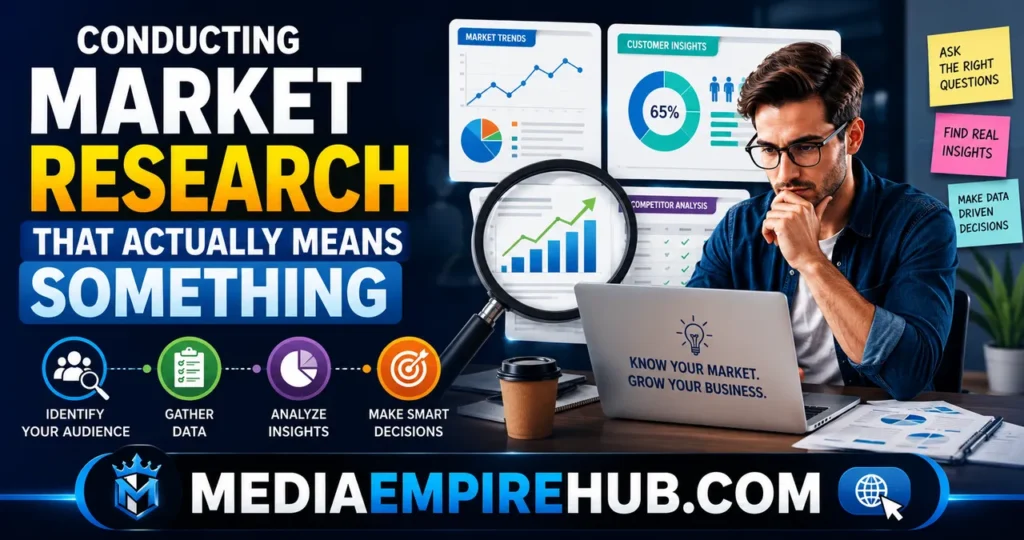
Market research sounds like a corporate buzzword, but at its core it’s simply the process of understanding who you’re selling to and why they’d choose you over the alternatives. Skipping this step is one of the most common reasons new businesses stumble, not because the founders lacked effort, but because they built something based on assumptions rather than evidence.
Begin by identifying your ideal customer with as much specificity as possible. Vague descriptions like “everyone who likes coffee” won’t help you make decisions about pricing, messaging, or where to advertise. Instead, dig into details like age range, income level, lifestyle habits, and the specific problem your product solves for them. Once you have a clearer picture, study your competitors closely, not to copy them, but to understand what they’re doing well and where they’re falling short. Read customer reviews on their websites and social channels, because that feedback is essentially free market research handed to you on a platter.
You should also pay attention to broader industry trends, since a shrinking market can sink even a well-run business, while a growing one can carry a mediocre business further than it deserves. Resources like reports from Forbes and industry publications can give you a sense of where consumer spending is heading. Combine that macro view with your own local or niche-specific research, and you’ll walk into your launch with far more confidence than someone who simply hoped for the best.
Writing a Business Plan That You’ll Actually Use
The phrase “business plan” tends to conjure images of a fifty-page document nobody ever reads again after it’s written, and honestly, that version of a business plan is mostly useless for small operators. What you actually need is a living document that clarifies your goals, your target market, your revenue model, and your rough financial projections, something you can revisit and adjust as you learn more.
Your plan should answer a few essential questions in plain language. What exactly are you selling, and to whom? How will you reach those customers, and what will it cost you to acquire each one? What are your expected expenses, and at what point do you expect to break even? You don’t need elaborate spreadsheets full of assumptions pulled from thin air, but you do need enough numerical grounding to know whether your idea can realistically sustain itself.
Many successful founders treat their business plan almost like a hypothesis they’re testing rather than a rigid rulebook. As management thinker Peter Drucker famously observed, the best way to predict the future is to create it yourself, and a flexible business plan gives you the structure to do exactly that while still leaving room to pivot when the market tells you something your original assumptions missed. If you’re mapping out how to start and launch a small business in 2026, treat your plan as a compass rather than a cage.
💡 Need a Step-by-Step Business Plan? Learn how to outline your roadmap, target market, and financial projections with our beginner-friendly guide:
📖 How to Write a Simple Business Plan
Choosing the Right Legal Structure for Your Business
This is the part where a lot of new entrepreneurs get intimidated, but it doesn’t need to be as complicated as it sounds. Your legal structure affects your taxes, your personal liability, and how easily you can raise money later, so it’s worth understanding the basics even if you eventually consult a professional.
Sole proprietorships are the simplest option, requiring minimal paperwork, but they leave your personal assets exposed if the business runs into legal or financial trouble. Limited liability companies, commonly known as LLCs, are popular among small business owners because they separate your personal assets from your business liabilities while remaining relatively simple to set up and maintain. Corporations offer even stronger liability protection and can be useful if you plan to bring on investors or eventually go public, but they come with more regulatory requirements and administrative overhead.
The right choice depends heavily on your specific situation, your risk tolerance, and your growth plans. Many entrepreneurs start as an LLC and later restructure as the business grows and its needs change. Government resources such as the official Small Business Administration website offer clear, free guidance on structuring your business correctly for your state and industry, and it’s worth spending an afternoon there before making a final decision. Getting this right early saves you significant headaches down the road, especially around tax season.
📌 In-Depth Registration Guide: Need a complete walkthrough on filing paperwork, getting an EIN, and securing permits? Read our step-by-step breakdown:
👉 How to Register a Small Business: Complete Guide
Handling the Legal and Regulatory Basics
Beyond choosing your structure, there’s a set of practical legal steps that most small businesses need to work through, and skipping them can create serious problems later. Registering your business name, obtaining an employer identification number from the tax authorities, and securing the appropriate licenses and permits for your industry and location are all part of the process. These requirements vary significantly depending on where you’re operating and what kind of product or service you’re offering.
Certain industries, like food service, childcare, or anything involving health and safety, come with additional layers of regulation that you’ll need to navigate carefully. It’s tempting to push these steps to the back burner while you focus on the exciting parts of launching, but operating without proper licensing can result in fines or even forced closure once authorities catch up with you. Take the time to research your specific requirements through your local government’s business office or a trusted legal advisor.
Insurance is another piece that new founders sometimes overlook until something goes wrong. General liability insurance, professional liability coverage, and property insurance all serve different purposes depending on your business type. It might feel like an unnecessary expense when you’re trying to keep costs low in the early days, but a single lawsuit or accident without coverage can wipe out a young business entirely. Think of insurance as a small recurring cost that protects years of hard work.
Funding Your Business Without Losing Your Mind
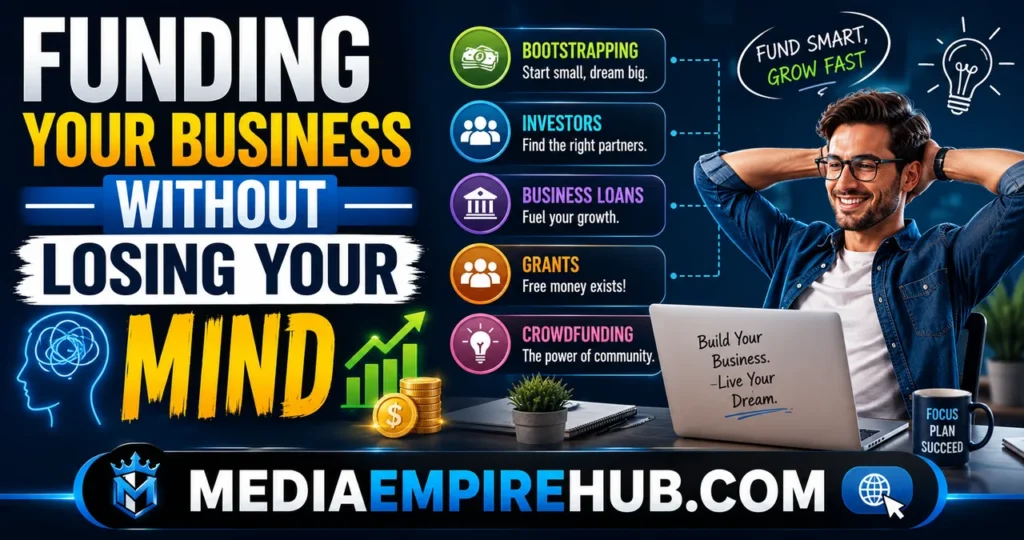
Money is usually the first practical obstacle people run into once the excitement of an idea settles into the reality of execution. The good news is that funding a small business today doesn’t require the same reliance on traditional bank loans that it once did. There are more paths available now than ever before, and understanding your options helps you choose the one that fits your specific situation rather than defaulting to whatever seems most familiar.
Bootstrapping, meaning funding the business yourself through savings or early revenue, remains one of the most common approaches because it lets you retain full ownership and control. It forces discipline too, since every dollar spent has to be justified by real necessity rather than convenience. If you don’t have upfront capital, check out our step-by-step roadmap on how to start a business with no money to launch using zero-cost strategies.
For businesses with more significant capital needs, options like small business loans, microloans from community development institutions, and crowdfunding platforms have become increasingly accessible. Angel investors and venture capital tend to fit only a small subset of businesses, typically those with high growth potential and scalability, so don’t feel discouraged if that path isn’t realistic for your particular venture. The table below breaks down some common funding sources and what they tend to work best for.
| Funding Source | Best Suited For | Key Consideration |
|---|---|---|
| Personal savings | Low-cost startups, service-based businesses | Keeps full ownership, limits scale |
| Friends and family loans | Early-stage capital needs | Requires clear repayment terms |
| Small business loans | Businesses with steady revenue plans | Involves credit checks and interest |
| Microloans | Very small startups, underserved entrepreneurs | Lower amounts, community-focused lenders |
| Crowdfunding | Product-based businesses with strong stories | Requires marketing effort upfront |
| Angel investors | High-growth, scalable startups | Involves giving up equity |
| Grants | Specific industries or demographics | Highly competitive, no repayment needed |
Whichever route you choose, build a buffer into your calculations. Almost every founder underestimates their initial costs, and having a financial cushion for unexpected expenses can be the difference between weathering a rough patch and shutting down prematurely.
💡 Need Capital to Launch Your Business? Explore all the proven ways to secure financing, from SBA loans and grants to angel investors and alternative lending options:
📖 How to Get Funding for a Small Business
Building a Brand That People Actually Remember
Branding is often mistaken for just a logo and a color palette, but it’s really about the feeling people associate with your business every time they interact with it. A strong brand tells customers what to expect, builds trust before a single transaction happens, and gives people a reason to choose you when there are cheaper or more convenient alternatives sitting right next to you.
Start by clarifying your brand’s personality and voice. Are you playful and casual, or polished and authoritative? Are you the budget-friendly, no-nonsense option, or the premium experience worth paying extra for? These decisions should influence everything from your website copy to your social media captions to the tone of your customer service emails. Consistency across these touchpoints is what makes a brand feel trustworthy rather than scattered.
Visual identity matters too, obviously, but it should come after you’ve nailed down the strategic groundwork. A well-designed logo and cohesive color scheme help with recognition, but they’re only effective when they’re backed by a clear sense of who you are and who you’re serving. Marketing expert Marty Neumeier once wrote that a brand isn’t what you say it is, it’s what your customers say it is, which is a good reminder that branding ultimately lives in perception, not just design files. If you’re figuring out how to start and launch a small business in 2026 with limited design budget, focus your energy on message clarity first, because polish without substance rarely converts.
Setting Up Your Online Presence the Right Way
There was a time when a business could survive purely on foot traffic or word of mouth, but that era has largely passed, even for local, brick-and-mortar operations. Customers research businesses online before they ever step through the door, and if they can’t find you or don’t like what they see, they’ll simply move on to a competitor who made a better first impression digitally.
A functional, well-designed website remains the foundation of your online presence, even in a world dominated by social media. It’s the one digital space you fully control, unlike social platforms where algorithm changes can tank your visibility overnight. Your website should clearly communicate what you offer, make it easy for people to contact you or make a purchase, and load quickly on mobile devices, since a large portion of your traffic will likely come from phones rather than desktops.
Search engine optimization deserves real attention here too, since ranking well on search engines drives consistent, low-cost traffic over time compared to paid advertising, which stops the moment you stop paying. Focus on writing genuinely useful content, using keywords naturally rather than stuffing them awkwardly into sentences, and making sure your site’s technical health, like page speed and mobile responsiveness, doesn’t hold you back. Tools and guidance from sources like Google’s own business resources can help you understand the fundamentals without needing to hire an expensive agency right away.
Choosing the Right Platforms for Marketing and Sales
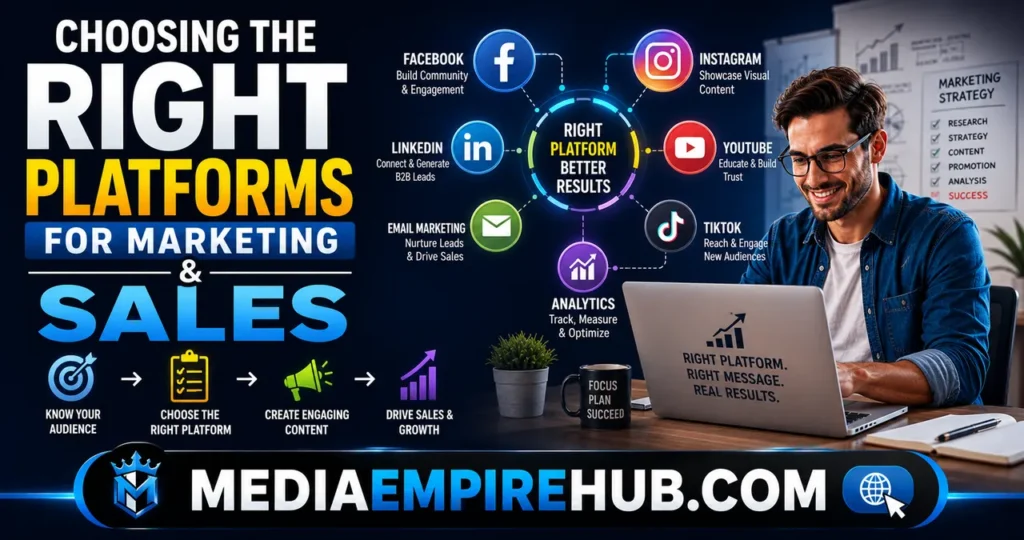
Not every platform makes sense for every business, and spreading yourself too thin across every social channel at once is a fast way to burn out without seeing meaningful results anywhere. Instead of trying to be everywhere, figure out where your specific customers actually spend their time and focus your energy there first.
Visual products tend to perform well on platforms built around imagery, while service-based businesses or those targeting professionals might find more traction on platforms centered around networking and thought leadership. Short-form video content has become a powerful tool for building brand awareness quickly, especially for businesses that can showcase their product in action or communicate their personality through casual, authentic content rather than polished advertisements. It’s worth experimenting early on to see what resonates, then doubling down once you find traction rather than guessing indefinitely.
E-commerce platforms have also matured significantly, making it easier than ever to set up an online store without needing technical expertise. Whether you choose a hosted platform or build something more custom, the priority should be a smooth, trustworthy checkout experience, since cart abandonment remains one of the biggest silent killers of online sales. Pair your chosen platforms with clear calls to action and make the path from discovering your business to actually buying from you as short and frictionless as possible.
Pricing Your Products or Services Without Guesswork
Pricing feels deceptively simple until you actually have to set a number and watch how customers respond to it. Price too low, and you’ll struggle to cover costs while also signaling lower quality than you actually offer. Price too high without justification, and you’ll scare away customers before they even give your product a chance.
Start by calculating your true costs, including materials, labor, overhead, and a reasonable margin for profit, not just enough to break even. Many new business owners underprice themselves because they’re nervous about competing, but sustainable businesses need healthy margins to survive lean months, reinvest in growth, and pay themselves a fair wage for their work. Research what competitors charge, not to copy them exactly, but to understand where your offering fits within the existing market landscape.
Consider the psychological aspects of pricing as well. Bundling products, offering tiered pricing options, or using anchor pricing to make your mid-range option feel like the obvious choice are all strategies that experienced businesses use to guide purchasing decisions without feeling manipulative when done thoughtfully. Remember that pricing isn’t set in stone forever. As you gather data on what customers are actually willing to pay, you can and should adjust, testing incrementally rather than making dramatic swings that confuse your existing customer base.
Building Systems and Processes Early On
It’s tempting to operate purely on instinct in the early days, handling everything as it comes up without much structure. That approach works fine when you’re the only person involved, but it quickly becomes chaotic the moment you bring on employees, contractors, or even just a growing volume of orders. Building basic systems early, even simple ones, saves you enormous headaches later.
Document your key processes as you develop them, whether that’s how you fulfill orders, respond to customer inquiries, or manage your inventory. This documentation doesn’t need to be elaborate. A simple checklist or a shared document outlining your standard steps is often enough to keep things consistent, especially once you’re not the only person handling every task. This kind of structure also makes it dramatically easier to train new hires down the road, since they can follow an established process instead of learning purely through trial and error.
Financial systems deserve particular attention here. Separate your business and personal finances from day one, even if you’re operating as a sole proprietor, since mixing the two creates a bookkeeping nightmare and can complicate your tax situation significantly. Using accounting software designed for small businesses, even a basic and affordable one, will save you countless hours compared to trying to track everything manually in spreadsheets or, worse, not tracking it consistently at all.
Hiring Your First Team Members the Smart Way
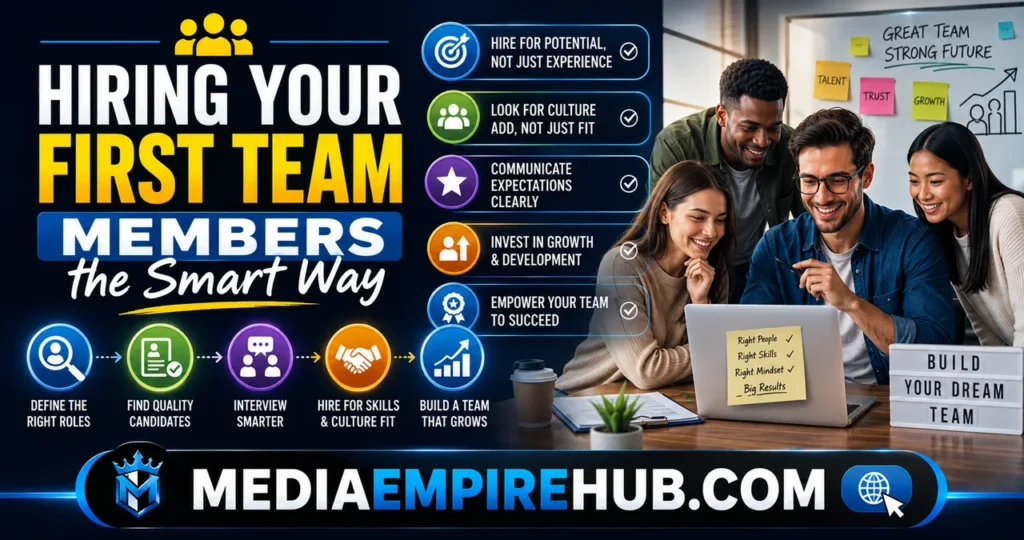
At some point, if your business grows the way you’re hoping, you’ll reach a point where you simply can’t do everything yourself anymore. Deciding when and who to hire is one of the more nerve-wracking transitions for small business owners, since payroll represents a significant ongoing commitment that doesn’t disappear during slow months.
Before hiring a full-time employee, consider whether the work could be handled by a contractor or freelancer, especially for specialized tasks like accounting, design, or marketing that don’t require someone in-house full time. This flexibility lets you access expertise without the long-term financial commitment of a permanent hire, which can be particularly valuable while your revenue is still stabilizing. As demand grows more consistent and predictable, transitioning key roles into full-time positions often makes more sense.
When you do hire, look beyond just skills and experience. Cultural fit matters enormously in a small business, where every person has an outsized impact on the overall atmosphere and customer experience compared to a large corporation where individual personalities blend into the background. Business leader Richard Branson has often spoken about prioritizing people who fit the company’s values, arguing that skills can be taught but attitude and character are much harder to change. Take your time with hiring decisions, even when you’re desperate for extra hands, because a poor hire often costs more in wasted time and team disruption than simply staying short-staffed a bit longer.
Marketing Your Business Without a Massive Budget
Marketing is where a lot of small business owners feel the most anxiety, largely because it seems to require either deep pockets or some kind of natural creative talent they don’t believe they possess. The truth is that effective marketing today relies far more on consistency, authenticity, and understanding your specific audience than it does on flashy, expensive campaigns.
Content marketing remains one of the most cost-effective strategies available, whether that’s writing helpful blog posts, sharing behind-the-scenes content on social media, or creating short videos that showcase your expertise or personality. This kind of content builds trust over time and positions you as a credible voice in your space, which matters enormously when customers are choosing between you and a competitor they know nothing about. Email marketing, often underestimated by newer entrepreneurs, continues to deliver some of the highest returns on investment because it reaches people who have already expressed interest in your business, rather than trying to capture attention from strangers scrolling past.
Word of mouth and referral programs shouldn’t be underestimated either, especially for local or service-based businesses. Encouraging satisfied customers to refer friends, whether through a formal incentive program or simply by delivering an experience worth talking about, taps into one of the oldest and most trusted forms of marketing that exists. If you’re strategizing how to start and launch a small business in 2026 on a tight budget, prioritize these organic, relationship-driven approaches before pouring money into paid advertising, which works best once you already understand your audience and messaging well enough to spend efficiently.
Profitable Business Ideas: Looking for low-risk, high-margin business models you can launch with minimal capital? Check out our curated guide:
👉 Low Investment Business Ideas With High Profit
Understanding Your Numbers and Financial Health
Plenty of passionate, hardworking entrepreneurs have watched their businesses fail not because their product was bad, but because they lost track of their finances until it was too late to course correct. Understanding your numbers isn’t optional, even if math and spreadsheets aren’t naturally your favorite part of running a business.
At minimum, you need to understand your cash flow, meaning the actual movement of money in and out of your business on a regular basis. A business can be profitable on paper while still running out of cash if payments are delayed or expenses hit before revenue comes in, which catches a surprising number of new founders off guard. Track your key metrics regularly, including revenue, expenses, profit margins, and customer acquisition costs, so you can spot problems early rather than discovering them during an annual review when it’s too late to adjust course.
Working with an accountant, even just for periodic check-ins rather than full-time bookkeeping, can be one of the smartest investments you make in your first year. They can help you understand tax obligations, identify deductions you might be missing, and flag financial red flags before they become serious problems. Financial literacy isn’t glamorous, but it’s genuinely one of the most reliable predictors of long-term business survival.
Delivering Customer Experience That Builds Loyalty
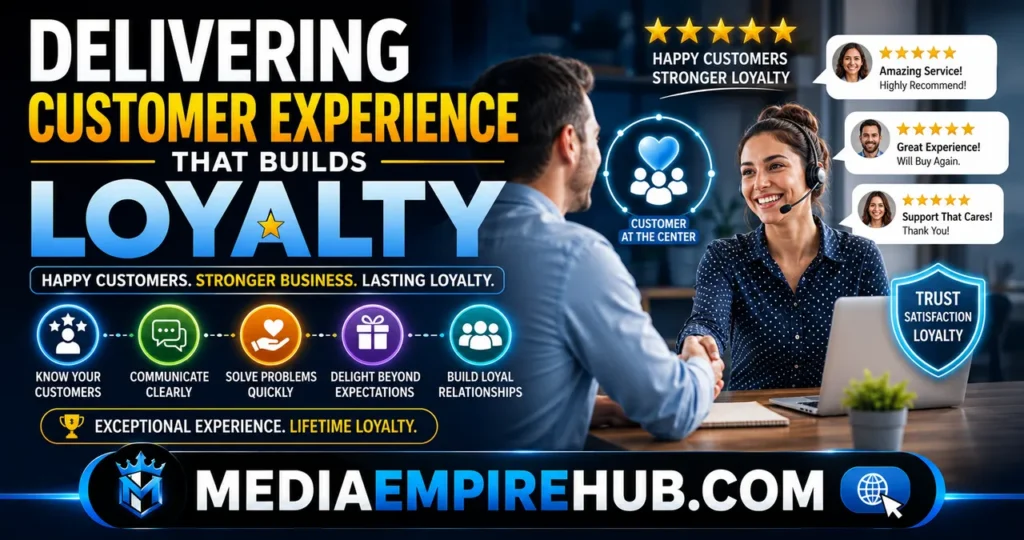
Acquiring a new customer typically costs significantly more than retaining an existing one, which is why customer experience deserves just as much attention as your marketing and product development. In a small business, you have an advantage that larger companies often can’t replicate, the ability to make customers feel genuinely known and valued rather than like just another transaction number.
Respond promptly to inquiries and complaints, and treat negative feedback as valuable information rather than a personal attack. Customers who feel heard, even when something goes wrong, often become more loyal than customers who never experienced a problem in the first place, simply because you demonstrated that you actually care about getting it right. Small, thoughtful touches, like personalized follow-up messages or handwritten notes with orders, can leave a lasting impression that larger competitors simply can’t replicate at scale.
Consistency matters just as much as individual gestures. Customers should know what to expect from you every single time they interact with your business, whether that’s the quality of your product, the tone of your communication, or how quickly you resolve issues. Building this kind of reliable reputation takes time, but it becomes one of your strongest competitive advantages once established, since satisfied customers naturally become advocates who bring in new business without any additional marketing spend on your part.
Using Technology to Work Smarter, Not Harder
Small business owners often wear far too many hats, and technology has become one of the most effective ways to reclaim time and reduce the mental load of juggling everything manually. The tools available today are more affordable and user-friendly than ever, meaning you don’t need a technical background to take advantage of them.
Customer relationship management software helps you keep track of interactions, follow-ups, and customer history without relying on memory or scattered notes. Scheduling and appointment tools eliminate the back-and-forth of coordinating meetings or bookings manually. Inventory management systems, even simple ones, prevent the frustrating and costly mistake of overselling products you don’t actually have in stock. Payment processing tools have also become dramatically easier to set up, letting you accept payments online or in person within minutes rather than navigating complicated merchant account applications.
The key is to resist the temptation to adopt every shiny new tool you come across. Choose technology that solves a specific, real problem you’re facing, and give it time to actually integrate into your workflow before adding more complexity. Overloading yourself with too many disconnected tools often creates more confusion than it solves, so prioritize simplicity and genuine usefulness over having the most sophisticated tech stack possible.
Preparing for Common Challenges and Setbacks
No matter how carefully you plan, you will encounter challenges you didn’t fully anticipate. This is simply part of running a business, and going in with realistic expectations helps you respond to setbacks with a clear head instead of panic. Cash flow crunches, slower-than-expected sales, supply chain hiccups, and unexpected competition are all common experiences that most successful business owners have navigated at some point.
One of the most valuable habits you can develop is treating setbacks as information rather than failure. If a marketing campaign flops, that tells you something useful about your messaging or targeting that you can adjust going forward. If a product isn’t selling as expected, that’s feedback worth investigating rather than a signal to give up entirely. Business author Jim Collins has written extensively about how the most enduring companies aren’t the ones that avoided hardship, but the ones that confronted brutal facts honestly while maintaining faith that they’d find a way through.
Building a support network also makes a significant difference during tough periods. Connecting with other small business owners, whether through local networking groups, industry associations, or online communities, gives you access to people who understand exactly what you’re going through and can offer practical advice grounded in real experience rather than theory. You don’t have to figure everything out entirely on your own, and reaching out for support isn’t a sign of weakness, it’s a smart strategic move that experienced founders rely on regularly.
Scaling Your Business Once the Foundation Is Solid
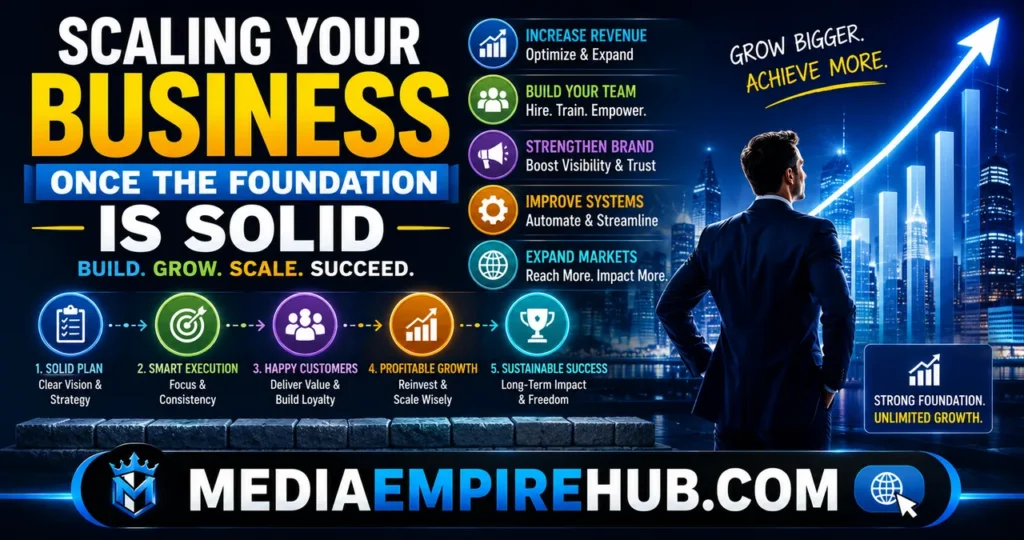
Once your business has found some stability, with consistent revenue and a clearer understanding of your customer base, you’ll likely start thinking about growth. Scaling is exciting, but it’s also where a lot of businesses stumble, either by growing too quickly without the infrastructure to support it, or by staying too cautious and missing genuine opportunities.
Before scaling, make sure your core operations are genuinely solid rather than held together by constant firefighting. Growth tends to amplify existing problems rather than fix them, so if you’re currently struggling with inconsistent quality control or disorganized finances, adding more volume will likely make those issues worse rather than better. Take time to strengthen your foundation, refine your processes, and ensure your team, if you have one, is equipped to handle increased demand before actively pursuing rapid growth.
When you do decide to scale, consider which direction makes the most sense for your specific business. That might mean expanding your product line, entering new geographic markets, or increasing your marketing investment now that you have proven data on what actually converts. Whatever direction you choose, scale deliberately and monitor your numbers closely throughout the process, since growth funded by debt or overextension without a clear path to profitability has sunk plenty of otherwise promising businesses.
To maintain strong team dynamics as you scale, learn how to measure company culture effectively.
Balancing Personal Life While Running a Business
It’s easy to let a new business consume every waking hour, especially in the early stages when everything feels urgent and the temptation to work constantly is strong. While some intense periods are genuinely unavoidable, particularly around launch, building sustainable habits early protects you from burning out before your business even has a chance to succeed long-term.
Set boundaries around your time where you realistically can, even if they’re imperfect at first. This might mean designating specific hours for deep, focused work versus reactive tasks like emails, or protecting at least one day a week for genuine rest rather than checking messages constantly. Your business benefits from you being clear-headed and energized far more than it benefits from you being perpetually exhausted and running on fumes, even if that feels counterintuitive when there’s always more that could be done.
Lean on your support system, whether that’s family, friends, or fellow entrepreneurs who understand the unique pressures of building something from scratch. Isolation tends to make every challenge feel bigger than it actually is, while sharing the journey with others, even just venting about a hard week, provides perspective and emotional relief that pure grinding never will. Taking care of yourself isn’t separate from taking care of your business, it’s actually one of the most overlooked ingredients in long-term entrepreneurial success.
Staying Adaptable as the Market Continues to Shift
The business landscape will keep evolving after your launch, and the habits that made you successful in your first year won’t necessarily be the same ones that keep you successful five years down the road. Staying genuinely curious and willing to adapt is one of the most underrated traits among long-term successful entrepreneurs, far more valuable than any single tactic or strategy you might learn today.
Make it a habit to regularly revisit your assumptions about your market, your customers, and your competitors, rather than assuming what worked last year will automatically keep working. Customer preferences shift, new competitors emerge, and platforms change their algorithms or policies in ways that can significantly impact your visibility and reach. Businesses that survive long-term tend to be the ones paying attention to these shifts early rather than reacting only once the impact becomes impossible to ignore.
This adaptability doesn’t mean chasing every new trend impulsively or abandoning your core identity at the first sign of change. It means staying grounded in your fundamental value proposition while remaining flexible about how you deliver it. If you’ve built genuine trust with your customers and maintained solid financial habits, you’ll have far more room to adapt gracefully when the inevitable shifts happen, rather than being caught completely off guard and scrambling to survive.
Final Thoughts on Starting Your Journey
Learning how to start and launch a small business in 2026 ultimately comes down to a combination of thoughtful planning, genuine understanding of your customers, and the willingness to keep learning and adjusting as you go. There’s no single formula that guarantees success, and anyone who promises you a shortcut is probably overselling something. What actually works is steady, informed action, taken one deliberate step at a time, paired with the humility to adjust when reality doesn’t match your original assumptions.
You don’t need to have every answer before you begin. You need a clear enough sense of your idea, your market, and your finances to take the first real step, and then the discipline to keep refining as you gather actual experience rather than theoretical guesses. The entrepreneurs who build lasting businesses aren’t necessarily the smartest people in the room, they’re often just the ones who stayed consistent, treated their customers well, and kept showing up even when things got uncomfortable.
If you’re standing at the edge of this decision right now, take that as a good sign rather than a source of anxiety. The fact that you’re researching, planning, and thinking critically about how to start and launch a small business in 2026 already puts you ahead of people who jump in blindly or never start at all. Trust the process, stay grounded in your numbers and your customers, and give yourself permission to learn as you build. That combination, more than any single trick or tool, is what turns an idea into something real.
Frequently Asked Questions
How much money do I actually need to start a small business in 2026
The amount varies enormously depending on your industry, but many service-based or digital businesses can start with a few hundred to a few thousand dollars, while product-based or brick-and-mortar businesses typically require significantly more upfront capital for inventory, equipment, or lease deposits. The most important step isn’t hitting a specific number, but rather calculating your actual expected costs honestly and building in a buffer for unexpected expenses, since nearly every founder underestimates their initial spending at least somewhat.
Do I need a business plan even if I’m starting small
Yes, though it doesn’t need to be a lengthy formal document. A concise plan that clarifies your target customer, your revenue model, and your basic financial expectations gives you a framework for decision-making and helps you spot flawed assumptions before you’ve invested significant time and money. Even a simple one or two page outline is far more useful than starting without any structured thinking at all.
What’s the biggest mistake new entrepreneurs make when launching
One of the most common mistakes is skipping proper market validation and building a product or service based purely on assumption rather than actual evidence of demand. Another frequent issue is underpricing, driven by fear of losing customers to competitors, which leaves the business without enough margin to survive slower periods or reinvest in growth. Combining thorough research with confident, sustainable pricing addresses both of these common pitfalls early.
Should I quit my job before starting my business
This depends heavily on your financial situation, your risk tolerance, and how much traction your business idea already has. Many successful entrepreneurs build their business part-time alongside steady employment until it generates reliable income, which reduces financial pressure and allows for more thoughtful decision-making rather than desperate, reactive choices driven by immediate cash needs. There’s no universally correct answer, but jumping in fully without any financial cushion or validated demand tends to be riskier than a gradual transition.
How long does it typically take for a small business to become profitable
Timelines vary significantly by industry, but many small businesses take anywhere from one to three years to reach consistent profitability, depending on startup costs, market conditions, and how efficiently the founder manages expenses and marketing. Service-based businesses with lower overhead often reach profitability faster than product-based businesses that require inventory investment and more complex logistics. Patience combined with disciplined financial tracking tends to matter more than speed in determining long-term success.
Is it still worth starting a small business given how competitive the market feels
Competition exists in nearly every industry, but that doesn’t mean there isn’t room for well-run, customer-focused businesses to succeed. Markets reward businesses that genuinely understand and serve their specific audience well, rather than only rewarding the first or biggest player in the space. If you approach your idea with realistic expectations, solid research, and a genuine commitment to serving your customers effectively, competition becomes far less intimidating than it initially appears.