
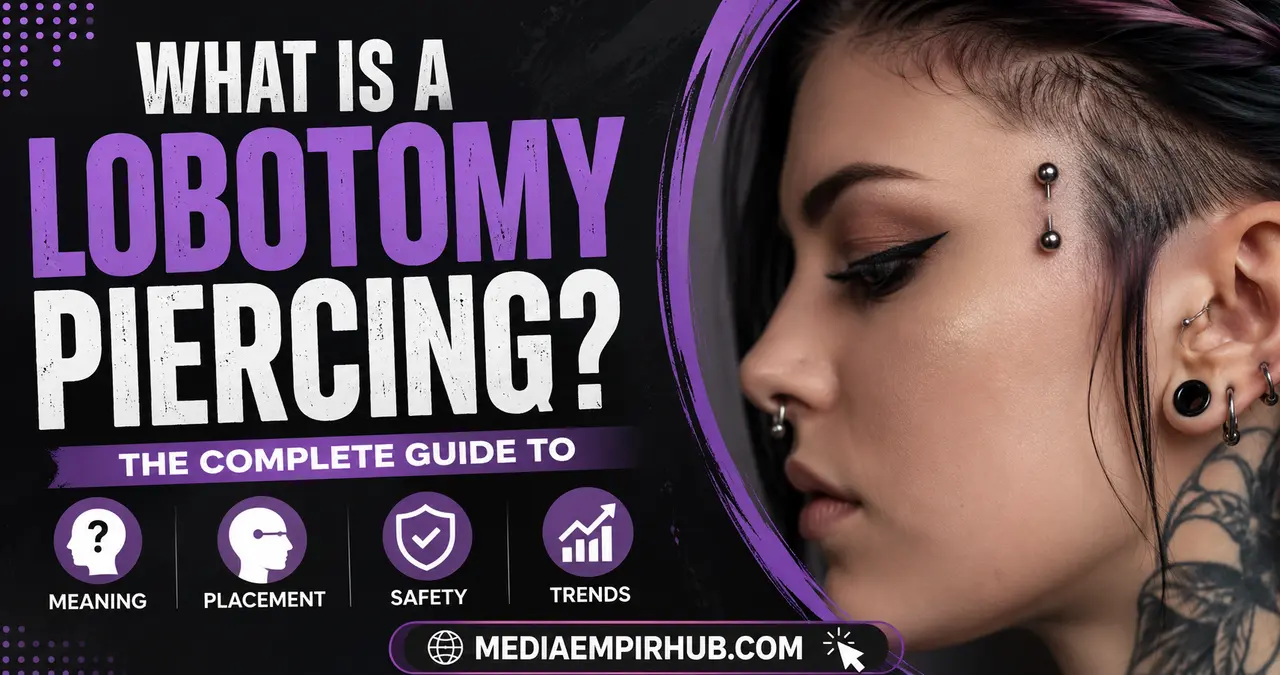
What Is a Lobotomy Piercing?
A lobotomy piercing is a rare and unconventional type of facial or cranial piercing that is often associated with extreme body modification culture. Unlike common piercings such as nose or ear piercings, this term is not widely standardized in professional piercing terminology.
In most contexts, a lobotomy piercing refers to a highly experimental or conceptual piercing placed in the upper facial region, sometimes symbolically referencing the historical medical procedure known as a lobotomy. However, it is important to clarify that it has no actual connection to medical brain procedures.
Instead, the name is largely symbolic, edgy, or aesthetic—used within niche communities of body modification enthusiasts.
Origin and Meaning Behind the Lobotomy Piercing
The term “lobotomy” originates from a controversial historical surgical procedure once used in psychiatry. In modern body art culture, the term has been reappropriated metaphorically, often representing:
- Rebellion against societal norms
- Expression of individuality
- Dark or alternative aesthetic identity
- Artistic body modification symbolism
This naming trend reflects how body art frequently draws from historical, cultural, or even provocative references to create meaning.
Anatomy and Placement of a Lobotomy Piercing
Because “lobotomy piercing” is not a standardized piercing type, its placement can vary. However, it is generally associated with upper facial or forehead regions, sometimes resembling:
- Surface piercings on the forehead
- Bridge piercings (between the eyes)
- Dermal anchors in the temple area
These placements are chosen for their visual impact rather than functionality.
The Procedure: How a Lobotomy Piercing Is Done
The process depends on the exact type of piercing being performed. In most cases, it involves either:
1. Surface Piercing
- A needle creates entry and exit points under the skin
- Jewelry is inserted beneath the surface layer
2. Dermal (Microdermal) Piercing
- A small anchor is inserted under the skin
- A decorative top sits on the surface
Professional piercers emphasize that precision and sterile technique are critical, especially for unconventional placements.
Pain Level and Experience
Pain levels vary significantly depending on placement and individual tolerance. Generally:
- Surface piercings: Moderate pain
- Dermal anchors: Brief but intense pressure
- Forehead/temple areas: More sensitive due to thinner skin
Many individuals describe the experience as quick but sharper than standard ear or nose piercings.
Healing Process and Aftercare
Healing time depends on the method used:
- Surface piercings: 6–12 weeks (or longer)
- Dermal piercings: 1–3 months initial healing
Essential Aftercare Practices:
- Clean with saline solution twice daily
- Avoid touching with unclean hands
- Minimize movement and irritation
- Avoid sleeping on the piercing area
Proper aftercare is crucial because unconventional piercings have a higher rejection rate.
Risks and Safety Considerations
Lobotomy piercings carry more risk than standard piercings due to placement and technique.
Common Risks:
- Infection
- Rejection or migration
- Scarring
- Nerve sensitivity
- Skin irritation
Because of these risks, it is essential to choose a highly experienced professional piercer rather than attempting any DIY methods.
Jewelry Types Used in Lobotomy Piercings
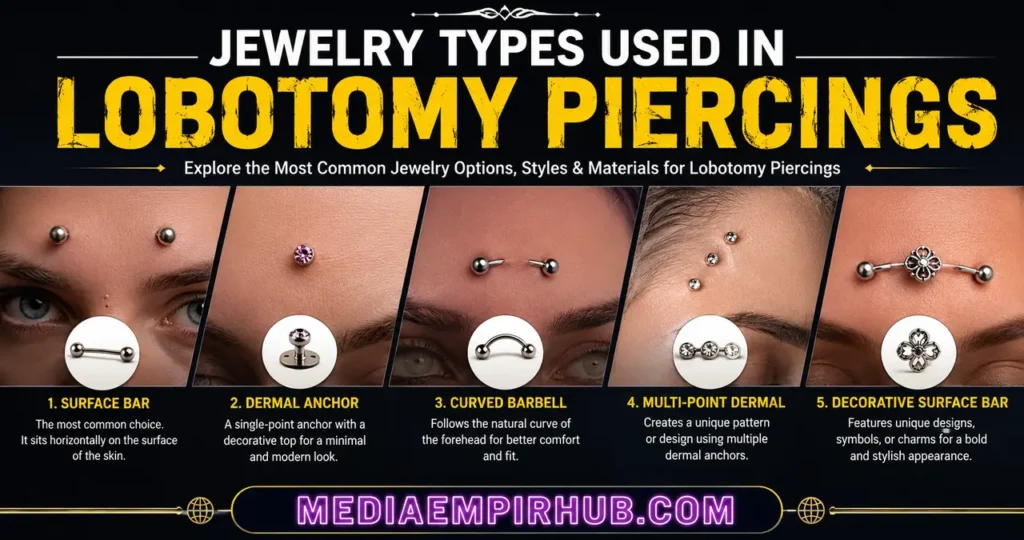
Depending on the style, jewelry may include:
- Surface bars
- Dermal anchors with decorative tops
- Titanium or surgical steel pieces
High-quality materials are critical to reduce allergic reactions and complications.
Why People Choose a Lobotomy Piercing
Despite its niche status, some individuals choose this piercing for:
- Unique and bold appearance
- Expression of alternative identity
- Artistic body modification
- Personal symbolism
In many cases, it’s less about trend-following and more about individual expression.
Cultural and Modern Body Modification Trends
Body modification has evolved significantly in recent years. Trends now include:
- Minimalist piercings
- Facial symmetry designs
- Experimental placements
- Dermal and surface innovations
The lobotomy piercing fits into the extreme or avant-garde category, appealing to those who want something outside mainstream aesthetics.
Misconceptions About Lobotomy Piercings
Misconception 1: It involves the brain
Reality: It is purely a surface or skin-level piercing.
Misconception 2: It’s medically dangerous by design
Reality: While riskier than standard piercings, it is safe when done professionally.
Misconception 3: It’s a common piercing
Reality: It is relatively rare and not widely recognized in professional piercing catalogs.
Lobotomy Piercing vs Other Facial Piercings
| Piercing Type | Placement | Risk Level | Popularity |
|---|---|---|---|
| Nose Piercing | Nostril/septum | Low | Very high |
| Eyebrow Piercing | Brow ridge | Moderate | High |
| Bridge Piercing | Between eyes | Moderate | Medium |
| Lobotomy Piercing | Upper facial/experimental | High | Low |
This comparison highlights how the lobotomy piercing stands out as a non-mainstream choice.
Cost and Professional Requirements
The cost varies depending on location and complexity:
- Typical range: $50–$150+
- Dermal piercings may cost more
Always ensure:
- Licensed studio
- Sterile equipment
- Experienced piercer
Cutting corners on cost can significantly increase risks.
Real-World Considerations Before Getting One
Before choosing a lobotomy piercing, consider:
- Workplace or social acceptance
- Long-term scarring
- Healing commitment
- Risk tolerance
This is not a casual decision—it requires planning and awareness.
Expert Insights on Extreme Piercings

Professional piercers often emphasize:
- Not all skin types are suitable
- Placement must match anatomy
- Aftercare determines success
Experts generally recommend starting with standard piercings before moving into more experimental modifications.
Long-Term Maintenance and Removal
Lobotomy piercings may not always be permanent.
Long-Term Factors:
- Possible rejection over time
- Visible scars after removal
- Need for periodic maintenance
If removed properly, most heal with minimal complications, though some scarring is likely.
FAQs About Lobotomy Piercing
What is a lobotomy piercing?
A rare and unconventional facial or surface piercing with symbolic naming.
Is it safe?
It can be safe if performed by a professional, but it carries higher risks than standard piercings.
Does it hurt?
Pain varies but is generally moderate to high depending on placement.
How long does it take to heal?
Typically between 1–3 months, sometimes longer.
Is it common?
No, it is considered a niche or extreme body modification.
Conclusion
The lobotomy piercing represents a bold, unconventional corner of modern body art, blending symbolism, individuality, and aesthetic experimentation. While it is not a mainstream piercing, it reflects a broader trend toward personalized and expressive body modification.
For those considering it, the key takeaways are clear: prioritize safety, choose experienced professionals, and fully understand the risks and commitment involved. Like many forms of advanced body art, a lobotomy piercing is less about fashion and more about intentional self-expression in an evolving cultural landscape.